

Sitting With Grief

A Reflection for Holy Saturday by Ellie VerGowe Highlands
Lectionary Reading for 04/04/2026: Lamentations 3:1-9, 19-24, Psalm 31:1-4, 15-16, 1 Peter 4:1-8, Matthew 27:57-66
Selected Passages for Reflection: Lamentations 3:1-9, 19-24 and Matthew 27:57-66
Read
Lamentations 3:1-9, 19-24
3 I am the man who has seen affliction
by the rod of the Lord’s wrath.
2 He has driven me away and made me walk
in darkness rather than light;
3 indeed, he has turned his hand against me
again and again, all day long.
4 He has made my skin and my flesh grow old
and has broken my bones.
5 He has besieged me and surrounded me
with bitterness and hardship.
6 He has made me dwell in darkness
like those long dead.
7 He has walled me in so I cannot escape;
he has weighed me down with chains.
8 Even when I call out or cry for help,
he shuts out my prayer.
9 He has barred my way with blocks of stone;
he has made my paths crooked.
19 I remember my affliction and my wandering,
the bitterness and the gall.
20 I well remember them,
and my soul is downcast within me.
21 Yet this I call to mind
and therefore I have hope:
22 Because of the Lord’s great love we are not consumed,
for his compassions never fail.
23 They are new every morning;
great is your faithfulness.
24 I say to myself, “The Lord is my portion;
therefore I will wait for him.”
Matthew 27:57-66
When it was evening, there came a rich man from Arimathea named Joseph, who also was himself a disciple of Jesus. He went to Pilate and asked for the body of Jesus; then Pilate ordered it to be given to him. So Joseph took the body and wrapped it in a clean linen cloth and laid it in his new tomb, which he had hewn in the rock. He then rolled a great stone to the door of the tomb and went away. Mary Magdalene and the other Mary were there, sitting opposite the tomb.
The next day, that is, after the day of Preparation, the chief priests and the Pharisees gathered before Pilate and said, “Sir, we remember what that impostor said while he was still alive, ‘After three days I will rise again.’ Therefore, command the tomb to be made secure until the third day; otherwise, his disciples may go and steal him away and tell the people, ‘He has been raised from the dead,’ and the last deception would be worse than the first.” Pilate said to them, “You have a guard of soldiers; go, make it as secure as you can. So they went with the guard and made the tomb secure by sealing the stone.

Reflect
These texts are ours, aren’t they? We, too, have felt like we are under the rod of God’s wrath. We, too, feel besieged and enveloped with bitterness and tribulation. We, too, have lost loved ones and put them in the ground. We know in our bones the feeling of this abandonment and the ache of this grief.
This is holy Saturday. It would be easier (at first) to avoid the pain of Maundy Thursday and Good Friday and move on quickly to the celebration of Easter Sunday. But one thing I know, as a chaplain and a griever, is that we cannot avoid difficult feelings or skip the grief. Today is the day we remember that the disciples put their friend in the ground after watching him die an awful death. We remember that Mary Magdalene and the other Mary vigil with Jesus through the unfolding trauma, keeping watch over his body.
We remember for Jesus and his loved ones, but we also remember for us. How often in religious spaces do we actually get to sit with our grief without being forced to move prematurely on to Christ’s victory over death? Holy Saturday is an invitation to let ourselves grieve, to feel whatever we feel about God, even if we feel God has abandoned us. Anyone who grieves will tell you that grief isn’t something that you get over or move through quickly. Grief is not linear. It can be loud, it makes others feel uncomfortable, and it can feel like being split in two. Grief is not a problem to fix… it simply IS, after all we have weathered. It doesn’t leave us, and sometimes it becomes a companion that needs to be listened to.
The only way to the hope of the resurrection is through suffering and through grief. And the writer of Lamentations, Joseph of Arimathea, Mary Magdalene, the other Mary, our Savior Jesus, and so many other ancestors of our faith show us how. They express grief. They voice their feelings of abandonment by God. Their grief is witnessed, and they witness each other’s grief. They weep and wail, and they move their bodies, rending their clothes.
We know now that if we avoid our grief and sadness and refuse to express our gripes with God, those feelings stay in our bodies and we get stuck. The grief may manifest itself sideways in anxiety, exhaustion, inability to feel even the good feelings, and it might even make us feel physical pain. If we refuse to connect with our grief, we may find ourselves also disconnected from others, from God, and even from ourselves.
So today of all days, you are invited to sit in Holy Saturday where your suffering, loss, and grief are not all wrapped up in a bow. You are invited to stay with yourself as you hurt. The wildness of your grief does not make you weak. It simply means that you are human and that you have loved. You deserve space to feel what needs to be felt, to let that move through your body (however long that takes!), and to thrive. Letting yourself feel even the “negative” things and sit in the grief is the path to resurrection, both in the gospels and in our lives. It is only in sitting with our grief and blessing others as they sit in theirs for as long as it takes that we move forward with hope.
Respond
Take a moment to sit alone or with someone else you love and trust. Place your hand on your heart and take a few breaths. You are invited to feel your hard feelings. What are you grieving today? What is your grief telling you? How might you gather the courage to stay with your grief? Show hospitality to whatever comes. If a wail builds up in your throat, let it free. If tears fall, let them. If words come, say them. If you need to move your body, move your body. If sitting in the stillness and desolation quietly feels right, do that. May you be witnessed by yourself, someone you trust, and certainly by God. You have loved, and you are loved. When you are finished today (for the need to express will come again!), go tell someone and receive some care. Today, you join with the ancestors of our faith as they waited at the tomb.
Rest
Loving God who grieved, suffered, and died, give me courage to sit with grief, suffering, and death too. Attend to me now as I feel abandoned, besieged, and enveloped by bitterness and tribulation. Wrap me in your arms, hold me close, and bless the tender and hurting places within me. Amen.
About the Author
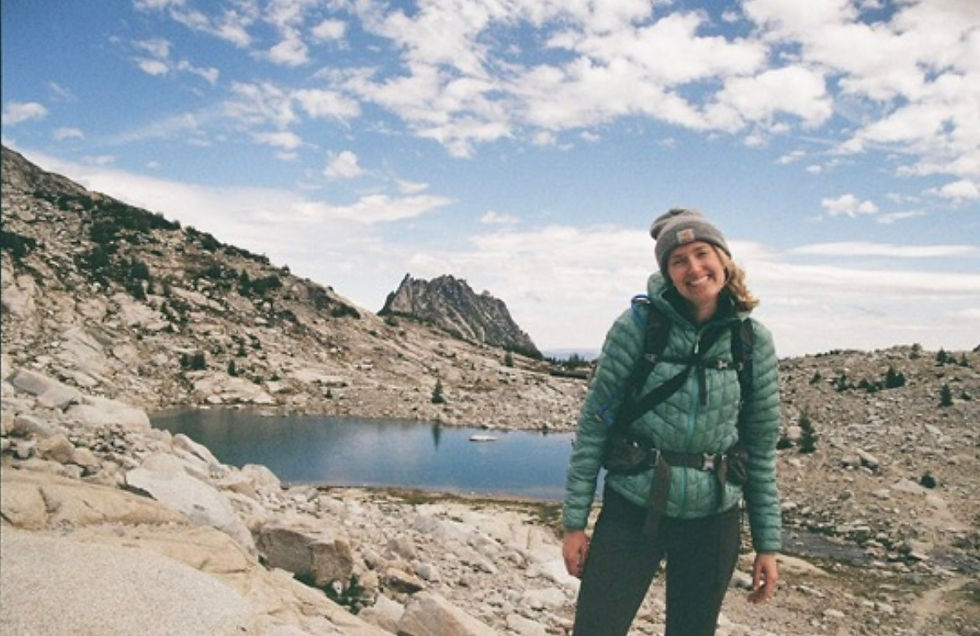
Ellie VerGowe Highlands is an ICU and oncology hospital chaplain in Seattle, WA, where she was born and raised. Ellie is married to Aaron, and together they have a wildly loving dog named Fiona. When she isn’t at the hospital, Ellie is singing, reading, writing poetry, gardening, hiking, and always practicing wonder and awe in the beautiful Pacific Northwest. These practices help her find strength and hope in the collective work of making a world where all people can thrive.


Thank you for sharing such useful insights. Proper cleaning techniques make a significant difference in maintaining concrete, stone, and paved areas over time. Hiring experts for Concrete Surface Cleaning Near Me helps property owners protect their investment while achieving consistently impressive results.